



Marine microorganism
-
Marine microorganism (61)

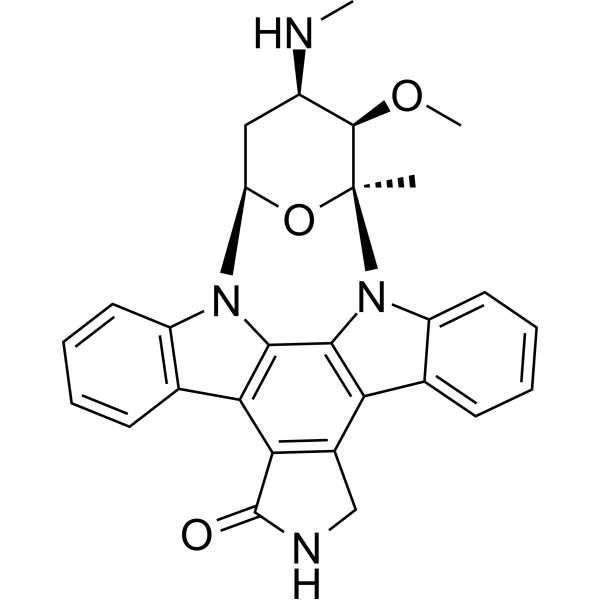
- Formula: C28H26N4O3
- Molecular Weight: 466.53
Staurosporine is a potent, ATP-competitive and non-selective inhibitor of protein kinases with IC50s of 6 nM, 15 nM, 2 nM, and 3 nM for PKC, PKA, c-Fgr, and Phosphorylase kinase respectively. Staurosporine also inhibits TAOK2 with an IC50 of 3 μM. Staurosporine is an apoptosis inducer.
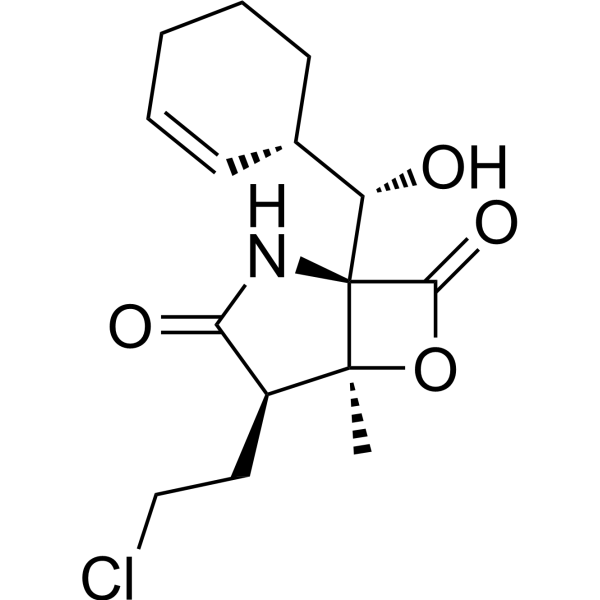
- Formula: C15H20ClNO4
- Molecular Weight: 313.78
Marizomib (Salinosporamide A) is a second-generation, irreversible, brain-penetrant, pan-proteasome inhibitor. Marizomib inhibits the CT-L (β5), CT-T-laspase-like (C-L, β1) and trypsin-like (T-L, β2) activities of the 20S proteasome (IC50=3.5, 28, and 430 nM, respectively).
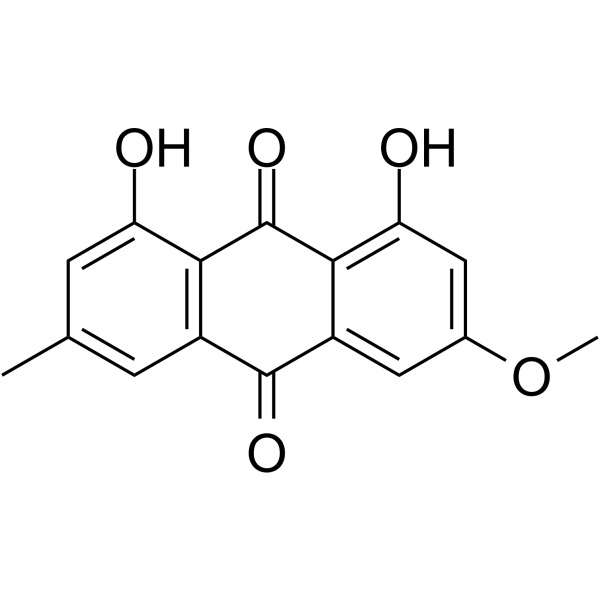
- Formula: C16H12O5
- Molecular Weight: 284.26
Physcion (Parietin), an anthraquinone derivative derived from the traditional Chinese medicine rhubarb, is an effective oral active 6-phosphogluconate dehydrogenase inhibitor with blood-brain barrier permeability, with IC50 and Kd values of 38.5 μM and 26.0 μM, respectively. Additionally, Physcion is an inhibitor of the <>bTLR4/NF-κB signaling pathway, exhibiting anti-inflammatory, antibacterial, and anticancer effects, and can induce Apoptosis and Autophagy in cancer cells.
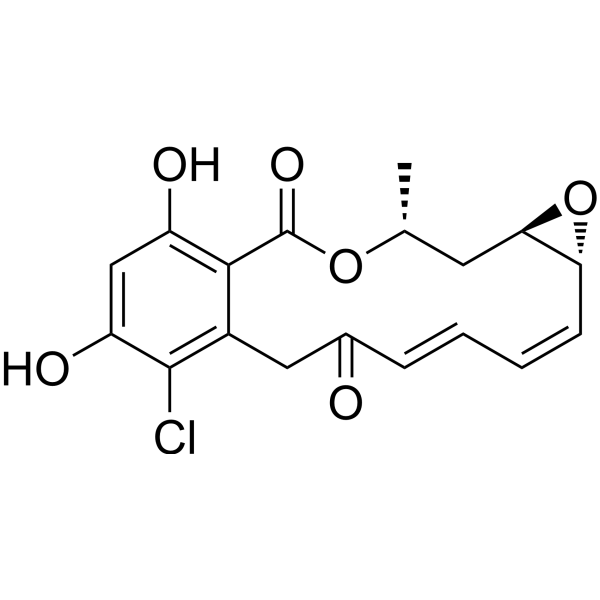
- Formula: C18H17ClO6
- Molecular Weight: 364.78
Radicicol is an inhibitor of Hsp90 with an IC50 value < 1 μM, and leads to proteasomal degradation. Radicicol exhibits inhibition on PDK with IC50s of 230 μM (PDK1) and 400 μM (PDK3). Radicicol is an antifungal and antimalarial antibiotic, impairs mitochondrial replication by targeting P. falciparum topoisomerase VIB. Radicicol is also an inhibitor of fat mass and obesity-associated protein (FTO), with an IC50 value of 16.04 μM.
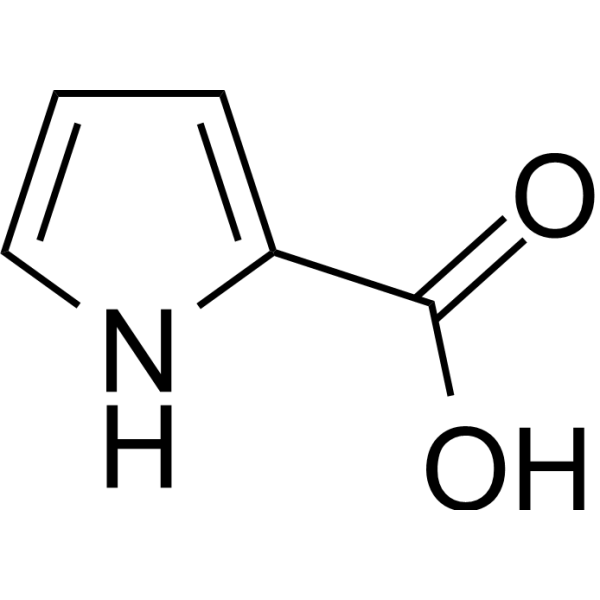
- Formula: C5H5NO2
- Molecular Weight: 111.10
Pyrrole-2-carboxylic acid is a natural alkaloid foumd in the marine bacterium Pelomonas puraquae sp. Nov. Pyrrole-2-carboxylic acid shows antibacterial activity and inhibits biofilm formation. Pyrrole-2-carboxylic acid serves as a precursor for various pyrrole derivatives like Clorobiocin (HY-123515), Coumermycin A1 (HY-N7452) in biosynthetic processes.
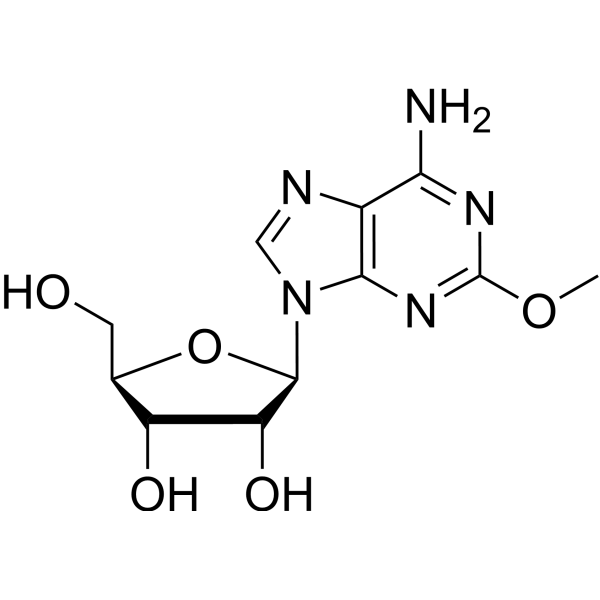
- Formula: C11H15N5O5
- Molecular Weight: 297.27
Spongosine (2-Methoxyadenosine) is a purine nucleoside analog. Purine nucleoside analogs have broad antitumor activity targeting indolent lymphoid malignancies. Anticancer mechanisms in this process rely on inhibition of DNA synthesis, induction of apoptosis, etc.

- Formula: C5H5NO2
- Molecular Weight: 111.10
Pyrrole-2-carboxylic acid (Standard) is the analytical standard of Pyrrole-2-carboxylic acid (HY-W001963). This product is intended for research and analytical applications. sp. Nov. Pyrrole-2-carboxylic acid shows antibacterial activity and inhibits biofilm formation. Pyrrole-2-carboxylic acid serves as a precursor for various pyrrole derivatives like Clorobiocin (HY-123515), Coumermycin A1 (HY-N7452) in biosynthetic processes.
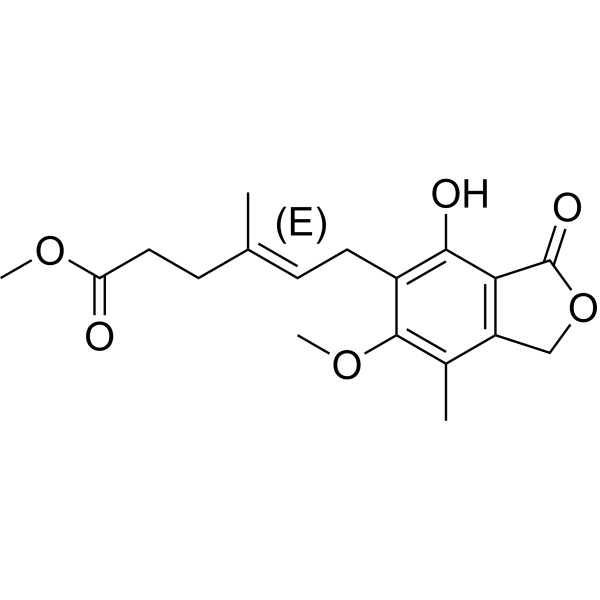
- Formula: C18H22O6
- Molecular Weight: 334.37
Methyl mycophenolate is a methyl ester of mycophenolic acid and is also found in marine-derived fungus Phaeosphaeria spartinae.

- Formula: C18H22O6
- Molecular Weight: 334.37
Avanafil (Standard) is the analytical standard of Avanafil. This product is intended for research and analytical applications. Avanafil (TA-1790) is a potent and selective phosphodiesterase-5 (PDE-5) inhibitor with IC50 values of 5.2 nM, 630 nM, 5700 nM, 6200 nM, 12000 nM, 27000 nM, 51000 nM and 53000 nM for PDE-5, PDE-6, PDE-4, PDE-10, PDE-8, PDE-7, PDE-2 and PDE-1, respectively. Avanafil activates NO/cGMP/PKG signaling-pathway to decrease loss in BMD, bone atrophy, and oxidative stress. Avanafil inhibits cyclic guanosine monophosphate (cGMP) hydrolysis and thus increases cGMP levels. Avanafil can be used for the research of erectile dysfunction and osteoporosis.
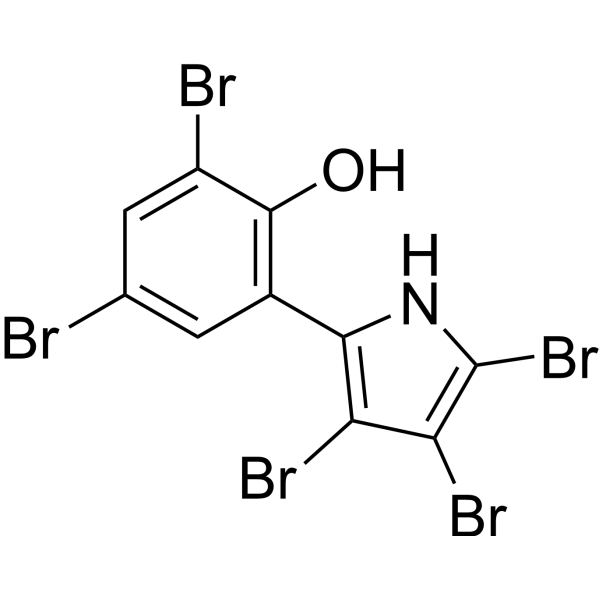
- Formula: C10H4Br5NO
- Molecular Weight: 553.66
Pentabromopseudilin (PBrP) is a marine antibiotic isolated from the marine bacteria Pseudomonas bromoutilis and Alteromonas luteoviolaceus. PBrP exhibits antimicrobial, anti-tumour and phytotoxic activities. PBrP is a reversible and allosteric inhibitor of myosin Va (MyoVa). PBrP also is a potent inhibitor of transforming growth factor-β (TGF-β) activity. PBrP can be used for the research of fibrotic diseases and cancer.
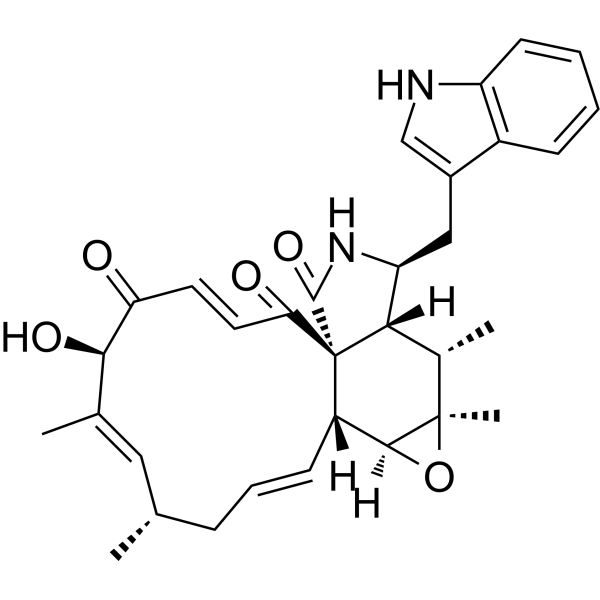
- Formula: C32H36N2O5
- Molecular Weight: 528.64
Chaetoglobosin A is a secondary metabolite and nematicide. Chaetoglobosin A is produced by Penicillium aquamarinium. Chaetoglobosin A targets Filamentous actin in cells, thereby inducing cell cycle arrest, and inhibiting membrane ruffle formation and cell migration. Chaetoglobosin A preferentially induces Apoptosis in chronic lymphocytic leukemia cells. Chaetoglobosin A induces dose- and time-dependent death in J2 larvae of the southern root-knot nematode (Meloidogyne incognita). Chaetoglobosin A can be used in studies related to root-knot nematode disease and chronic lymphocytic leukemia.
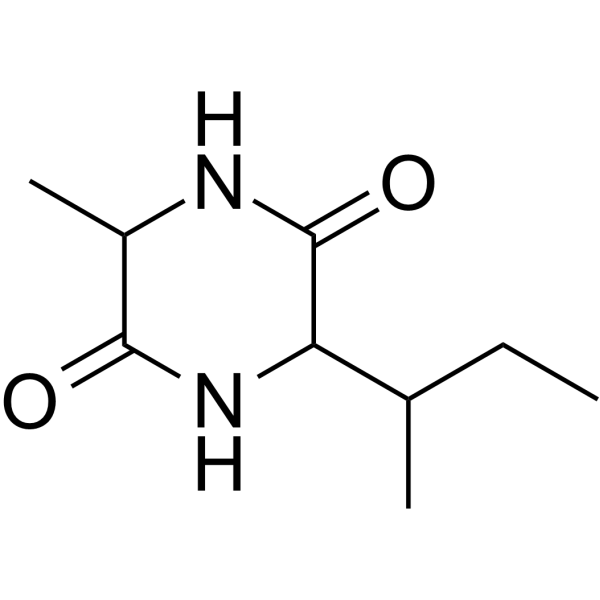
- Formula: C9H16N2O2
- Molecular Weight: 184.24
Cyclo(Ile-Ala) is found in marine actinomycete 11014 I..

- Formula: C10H18O2
- Molecular Weight: 170.25
(R)-(+)-Citronellic acid is a chiral carboxylic acid and can be used as a drug intermediate.

- Formula: C28H26N4O3
- Molecular Weight: 466.53
Staurosporine (Standard) is the analytical standard of Staurosporine. This product is intended for research and analytical applications. Staurosporine is a potent, ATP-competitive and non-selective inhibitor of protein kinases with IC50s of 6 nM, 15 nM, 2 nM, and 3 nM for PKC, PKA, c-Fgr, and Phosphorylase kinase respectively. Staurosporine also inhibits TAOK2 with an IC50 of 3 μM. Staurosporine is an apoptosis inducer[1][2][3][4][5].

- Formula: C4H2BrNO2
- Molecular Weight: 175.97
3-Bromo-1H-pyrrole-2,5-dione (compound 2c) is a 3-substituted pyrrole-2,5-dione compound with antibacterial activity. 3-Bromo-1H-pyrrole-2,5-dione inhibits pathogenic strains of S. aureus ATCC 25923, E. coli ATCC 25922, P. aeruginosa ATCC 27853, with MIC values of 32 μg/mL, 32 μg/mL, and 64 μg/mL, respectively.

- Formula: C34H50N6O11
- Molecular Weight: 718.79
Petrobactin is a bis-catechol α-hydroxy acid siderophore, Fe (III) chelator, and oxidative stress protector. Petrobactin is produced by marine bacteria and Bacillus anthracis Sterne strain under iron-starvation conditions. Petrobactin promotes the biodegradation of petroleum hydrocarbons by microorganisms, as well as the proliferation, virulence exertion, vegetative growth, sporulation efficiency, and spore binding of Bacillus anthracis; it also mediates community iron acquisition in the global ocean. Petrobactin can be used in anthrax-related research.

- Formula: C32H36N6O4
- Molecular Weight: 568.67
Cristatumin E (Eurocristatine) is a natural alkaloid.
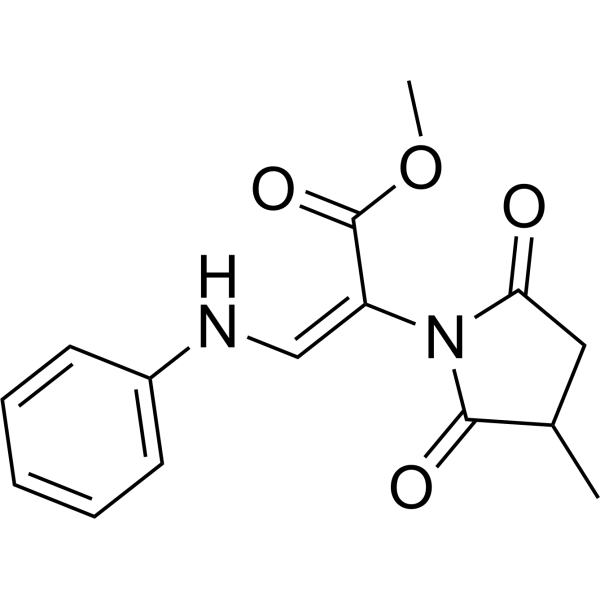
- Formula: C15H16N2O4
- Molecular Weight: 288.30
Sydowimide A is a potent inhibitor of Src homology region 2 domain-containing phosphatase-1 (SHP1), T-cell protein tyrosine phosphatase (TCPTP) and leukocyte common antigen (CD45), with IC50 values of 1.5, 2.4 and 18.83 μM, respectively.



